Feelings that are Difficult to Express
Some music captures the energy of a dance or the spirit of a place. Other music draws us into a more private world, giving voice to feelings that are difficult to express. In Johannes Brahms’ Alto Rhapsody, a solitary figure struggles with despair before music gradually opens the way toward comfort and human connection.
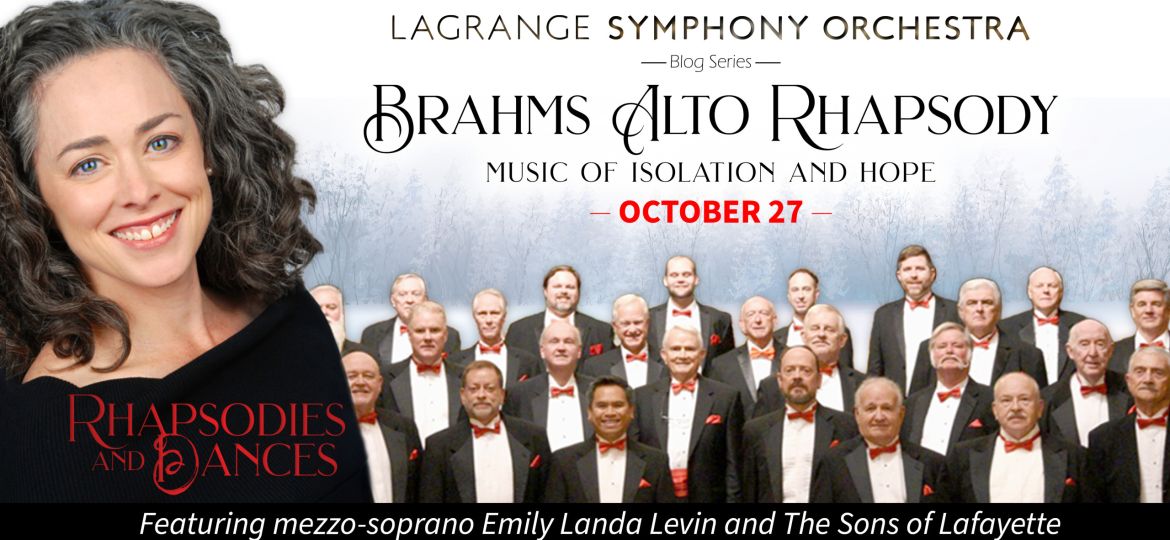
On October 27, the LaGrange Symphony Orchestra will perform this deeply expressive work featuring mezzo-soprano Emily Landa Levin and the Sons of Lafayette male chorus. Together, solo voice, chorus, and orchestra, conducted by Maestro Richard Prior, bring a remarkable musical setting of poetry by Johann Wolfgang von Goethe to life. [GET TICKETS HERE]

From Free but Happy to the Alto Rhapsody
At the LaGrange Symphony Orchestra’s September concert [You may read September’s Symphony Spectacular concert review HERE], audiences encountered a personal motto associated with Johannes Brahms: Frei aber froh, meaning “Free but happy.” The words, represented by the musical notes F–A-flat–F, are associated with his Symphony No. 3, a work that offers a glimpse into the composer’s independent spirit.
However, Brahms’ music could also reveal a more introspective side. His Alto Rhapsody, composed in 1869, fourteen years before his Symphony No. 3, explores loneliness, emotional struggle, and the possibility of consolation. The two works offer different perspectives on a composer whose private life has long intrigued musicians and scholars.
The circumstances surrounding the Alto Rhapsody are particularly compelling. Brahms was closely connected to the family of composers Robert and Clara Schumann, and some scholars believe he developed an unspoken affection for their daughter, Julie. When Julie became engaged to Count Vittorio Amadeo Radicati di Marmorito, Brahms composed the Alto Rhapsody, which was presented to her on the occasion of her marriage in 1869. He attended the wedding as her man of honour.
Whether Brahms’ feelings for Julie influenced the work’s emotional character remains open to interpretation. Yet the timing invites us to consider the possibility that the music’s themes of isolation and consolation held a personal resonance for the composer. Rather than offering a straightforward expression of sadness, Brahms created a work that moves toward the hope of comfort and peace.
The Poetry Behind Brahms’ Alto Rhapsody
Brahms found the words for his Alto Rhapsody in Harzreise im Winter (Winter Journey in the Harz Mountains), a poem by Johann Wolfgang von Goethe. Goethe’s winter travels in the Harz Mountains in 1777, inspired the poem which explores both the desolation of the landscape and the troubled inner life of a solitary wanderer.
From Goethe’s much longer poem, Brahms selected three stanzas. These words move from a sense of isolation and alienation toward a plea for relief. The wanderer feels cut off from others, struggling with pain that seems impossible to ease. The final passage appeals to the “Father of Love,” asking for the restoration of a troubled heart.
The Rhapsody is sung in German.
The Meaning Behind the Music
To better understanding the work’s emotional progression, you need to understand the language. So, for any readers who do not speak German, read on.
An official translation for this performance is not available at the time of this post, but here is a general translation from German to English of the stanzas Brahms used.
[English translation: From the Wikipedia article “Alto Rhapsody,” accessed October 2026. Licensed under CC BY-SA 4.0.]
But who is that apart?
His path disappears in the bushes;
behind him the branches spring together;
the grass stands up again;
the wasteland engulfs him.
Ah, who heals the pains
of him for whom balsam turned to poison?
Who drank hatred of man
from the abundance of love?
First scorned, now a scorner,
he secretly feeds on
his own merit,
in unsatisfying egotism.
If there is on your psaltery,
Father of love, one note
his ear can hear,
then refresh his heart!
Open his clouded gaze
to the thousand springs
next to him who thirsts
in the wilderness!
How Voice and Chorus Transform the Music
One of the most striking features of Alto Rhapsody is the way Brahms brings together solo voice, male chorus, and orchestra. The restless, unsettled opening reflects the wanderer’s anguish, with the alto solo drawing listeners into his inner world. When the male chorus enters, the music takes on a more expansive, reassuring character, moving toward the sense of consolation that shapes the final section.
For this performance, the LSO welcomes back New York-based mezzo-soprano Emily Landa Levin, who appeared in LaGrange last October. Her experience as an alto soloist in major choral works, including Mendelssohn’s Elijah, Bach’s Magnificat, and Mozart’s Coronation Mass, brings a rich background to Brahms’ demanding and expressive vocal writing.
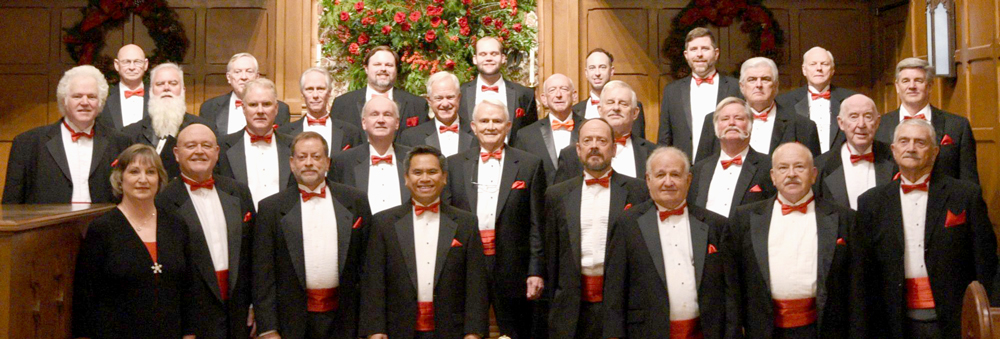
Joining her are the Sons of Lafayette Male Choir, a volunteer ensemble based in LaGrange that serves communities throughout West Central Georgia and East Central Alabama. Their participation brings a special local connection to this performance. As Levin’s solo voice gives expression to the wanderer’s anguish, the choir’s collective sound helps carry the music toward consolation, bringing the work’s emotional transformation into focus.
The chorus is therefore more than an addition to the solo voice. Its entrance marks a turning point in the work, suggesting that consolation may come through something beyond the solitary self. Whether or not Brahms was expressing a personal experience, the music gives this emotional journey a compelling shape.
A Moment of Music That Speaks to Us All
More than a century and a half after its composition, Alto Rhapsody continues to speak to experiences that remain familiar: loneliness, the desire to be understood, and the hope that comfort can be found even in difficult circumstances.
As the LaGrange Symphony Orchestra continues its 2026–27 season, The Moments of Music, this work offers an opportunity to hear Brahms from another perspective. After experiencing the spirit of Frei aber froh in September’s Third Symphony, audiences can now encounter a more searching and contemplative side of the composer.
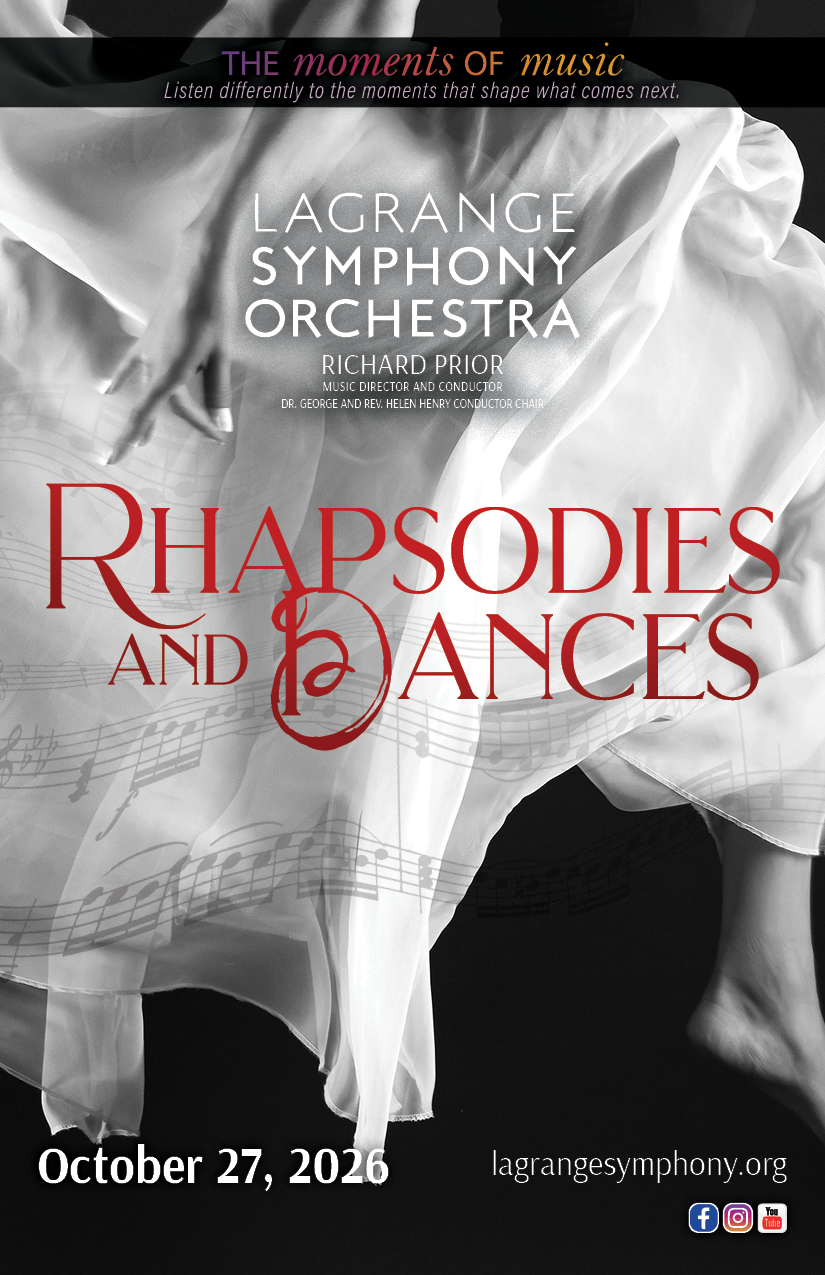
Join us on Tuesday, October 27, at 7:30 p.m. in Callaway Auditorium for Rhapsodies & Dances, featuring Brahms’ Alto Rhapsody with Emily Landa Levin and the Sons of Lafayette, alongside a program of music exploring the expressive possibilities of rhythm and movement.
Some musical moments in this program offer exuberance. Others invite reflection. Together, they remind us how many different ways music can speak to the human experience.
Full Concert Line-up
- Rhapsody España – Emmanuel Chabrier
- Alto Rhapsody – Johannes Brahms
featuring Emily Landa Levin, mezzo-soprano and The Sons of Lafayette male choir - Japanese Suite – Gustav Holst
- Investiture Dances – Alun Hoddinott
- English Dances Set 1 – Malcolm Arnold
- Four Scottish Dances – Malcolm Arnold
© LaGrange Symphony Orchestra 2026/2027 | All rights reserved | 706.882.0662 | Richard Prior, Music Director & Conductor