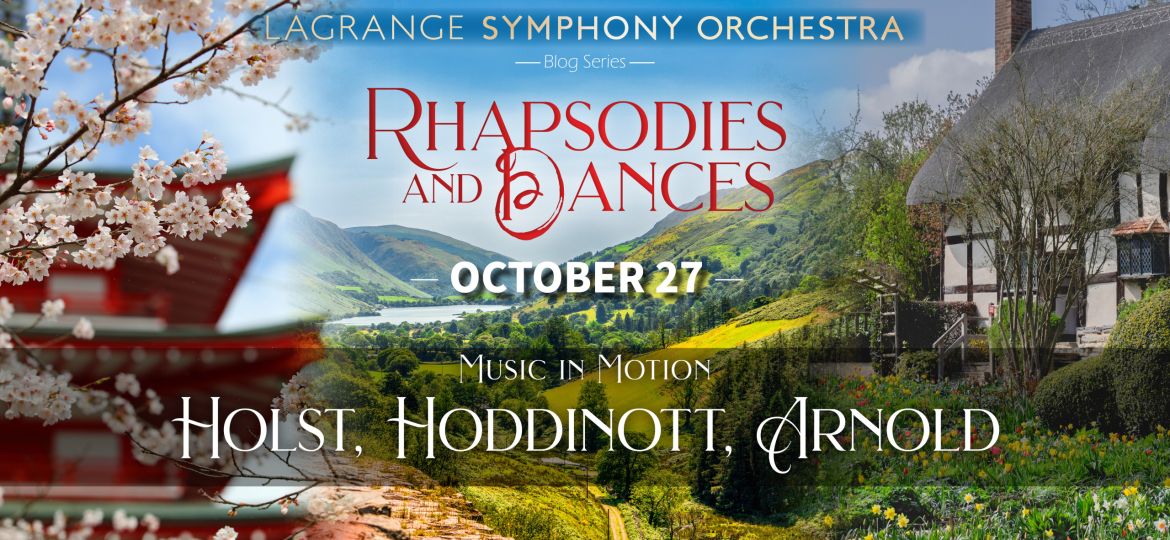
Three Composers, Three Musical Perspectives
You don’t need to see dancers to feel the movement. Let’s explore three composers whose music will be featured in the “Dances” portion of the LaGrange Symphony Orchestra’s (LSO’s) upcoming concert.
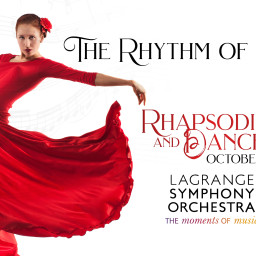
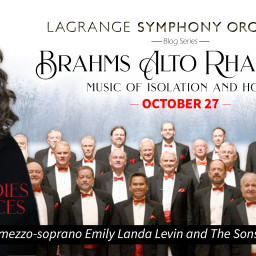
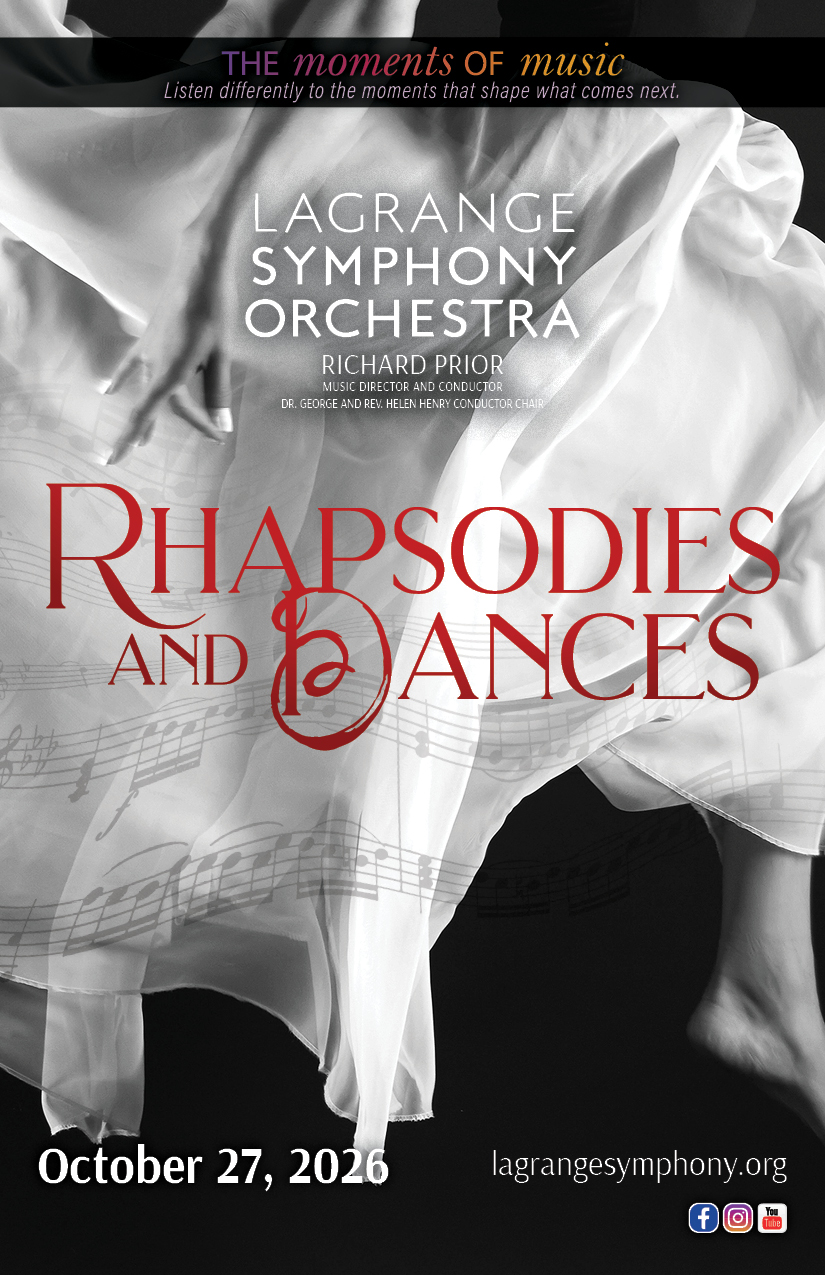
Under the direction of Maestro Richard Prior, The LSO will perform a full program of Rhapsodies & Dances (7:30PM | October 27 | Callaway Auditorium | LaGrange, GA). Special guest artists will be Emily Landa Levin, mezzo-soprano, and The Sons of Lafayette, male choir. [Read more about these guest artists and the Brahms Alto Rhapsody HERE.]
Full concert repertoire is listed at the end of this post.
Gustav Holst: Japanese Suite
Written in 1915, Japanese Suite began with a request from Japanese dancer Michio Ito, who was working in London. Ito shared traditional Japanese melodies with Gustav Holst in a rather unexpected way: by whistling them. Holst used these tunes as the basis for much of the suite. The exception is the Dance of the Marionette, for which Holst composed his own melody.
The suite’s six sections offer a variety of moods: Prelude: Song of the Fisherman, Ceremonial Dance, Dance of the Marionette, Interlude: Song of the Fisherman, Dance under the Cherry Tree, and Finale: Dance of the Wolves.
Listen for the delicate interplay of woodwinds, plucked strings, and the glockenspiel—a percussion instrument with small metal bars that produce bright, bell-like tones—in the Dance of the Marionette. Then, in the Dance of the Wolves, notice how the melody climbs higher and gathers speed, building to an exciting, racing finish.
Alun Hoddinott: Investiture Dances
Just as Holst drew inspiration from traditional Japanese melodies, Welsh composer Alun Hoddinott looked to the musical traditions of his native Wales for Investiture Dances. Written for the 1969 investiture of Prince Charles as Prince of Wales, the work draws on the character of Welsh folk music rather than borrowing familiar tunes. The result brings a distinctly Welsh cultural tradition into a concert work written for an important national celebration.
Malcolm Arnold: English and Scottish Dances
English Dances, Set 1
Composed in 1950, Malcolm Arnold’s English Dances, Set 1, began with a suggestion from his publisher, Bernard de Nevers. Inspired by Dvořák’s Slavonic Dances and Bartók’s Romanian Folk Dances, the idea was to give English dance and song its own place in this tradition. Arnold responded with original melodies that capture the character of English folk music without directly borrowing traditional tunes.
The four movements move through contrasting moods, from a gentle opening to a lively dance suggestive of a village celebration, followed by a more melancholy passage and a spirited finale. Listen for the changing character of the music, as Arnold moves from quieter, flowing melodies to energetic rhythms.
Four Scottish Dances
Continuing the fashionable exploration of regional dance, Four Scottish Dances, composed in 1957, draws on the character of Scotland’s traditional dances, again without directly borrowing existing folk tunes. Each has its own personality: the first evokes a strathspey, a traditional Scottish dance known for its distinctive dotted rhythms; the second is a lively reel; the third offers a gentler, more reflective mood, evoking a calm summer day in the Hebrides; and the final dance brings the set to a lively close.
Arnold adds a touch of humor in the second dance, when the music suddenly slows for a playful bassoon passage that sounds almost as if it is stumbling. Together, the four dances offer a musical journey through contrasting moods, from spirited rhythms to a quieter moment of reflection.
Full Concert Line-up
- España – Emmanuel Chabrier
- Alto Rhapsody – Johannes Brahms
featuring Emily Landa Levin, mezzo-soprano and The Sons of Lafayette male choir - Japanese Suite – Gustav Holst
- Investiture Dances – Alun Hoddinott
- English Dances, Set 1 – Malcolm Arnold
- Four Scottish Dances – Malcolm Arnold
From delicate melodies to spirited dance rhythms, these works reveal how composers transform the character of a place and its musical traditions into something uniquely their own.
© LaGrange Symphony Orchestra 2026/2027 | All rights reserved | 706.882.0662 | Richard Prior, Music Director & Conductor